Dubai has never been shy about pushing boundaries—whether in architecture, lifestyle, or interior design. As one of the world’s most influential design hubs, Dubai sets trends that resonate across the Middle East and far beyond. In recent years, the conversation around luxury interiors in Dubai has evolved dramatically, blending cultural depth with bold innovation. In 2025, the city’s design language is marked by a fusion of opulence, sustainability, technology, and global influences, creating spaces that feel both extravagant and meaningful.
If you’re planning a renovation, designing a new home, or simply searching for inspiration, here are the top interior design trends in Dubai that are defining modern luxury this year.
1. The Rise of Sustainable Luxury
Sustainability is no longer a niche preference—it has become a global design expectation, and Dubai is embracing this shift with its own luxurious twist. Homeowners are increasingly choosing eco-friendly materials, recycled woods, low-VOC paints, and energy-efficient systems.
Why It’s Trending in Dubai:
- A growing focus on green living supported by UAE sustainability initiatives
- Increased demand from buyers and investors for eco-conscious interiors
- Luxury brands offering environmentally responsible collections
Expect to see interiors filled with organic textures, earthy palettes, and biophilic design elements—all while maintaining Dubai’s signature refined aesthetic.
2. Seamless Smart Homes
Dubai has always been ahead in adopting technology, and interiors are no exception. Smart homes are not a novelty anymore—they’re a standard. The focus now is integration, where technology blends invisibly into the design.
Popular Smart Features in 2025:
- Automated lighting and climate control
- Smart glass that shifts opacity at the touch of a button
- Invisible multi-room sound systems
- AI-driven home assistants integrated into fixtures
- App-controlled curtains, doors, and security
The goal is seamless comfort—spaces that respond effortlessly to the habits and preferences of their residents.
3. Curved and Organic Forms
In contrast to the sharp angles of early modernism, 2025 Dubai interiors are embracing soft, curved silhouettes. These organic shapes evoke a sense of fluidity and calm, aligning with homeowners’ desire for sanctuary-style environments.
Where You’ll See the Trend:
- Rounded sofas and statement armchairs
- Arched doorways and built-in wall niches
- Curvy kitchen islands and countertops
- Circular lighting fixtures
These forms also complement the city’s futuristic architectural vibe while adding a touch of warmth and comfort.
4. Maximalism with Middle Eastern Elegance
Dubai’s design identity is rooted in richness—ornate details, deep colors, and luxurious materials. This year, designers are refining the traditional approach into a more curated maximalism, bringing cultural motifs together with modern aesthetics.
Key Elements:
- Patterned wallpapers inspired by Arabic geometry
- Jewel-toned textiles—emerald, sapphire, ruby
- Brass inlays and handcrafted accessories
- Intricate lattice screens (mashrabiya) used in contemporary ways
This trend allows homeowners to celebrate cultural heritage while keeping spaces fresh and modern.
5. Statement Lighting Takes Center Stage
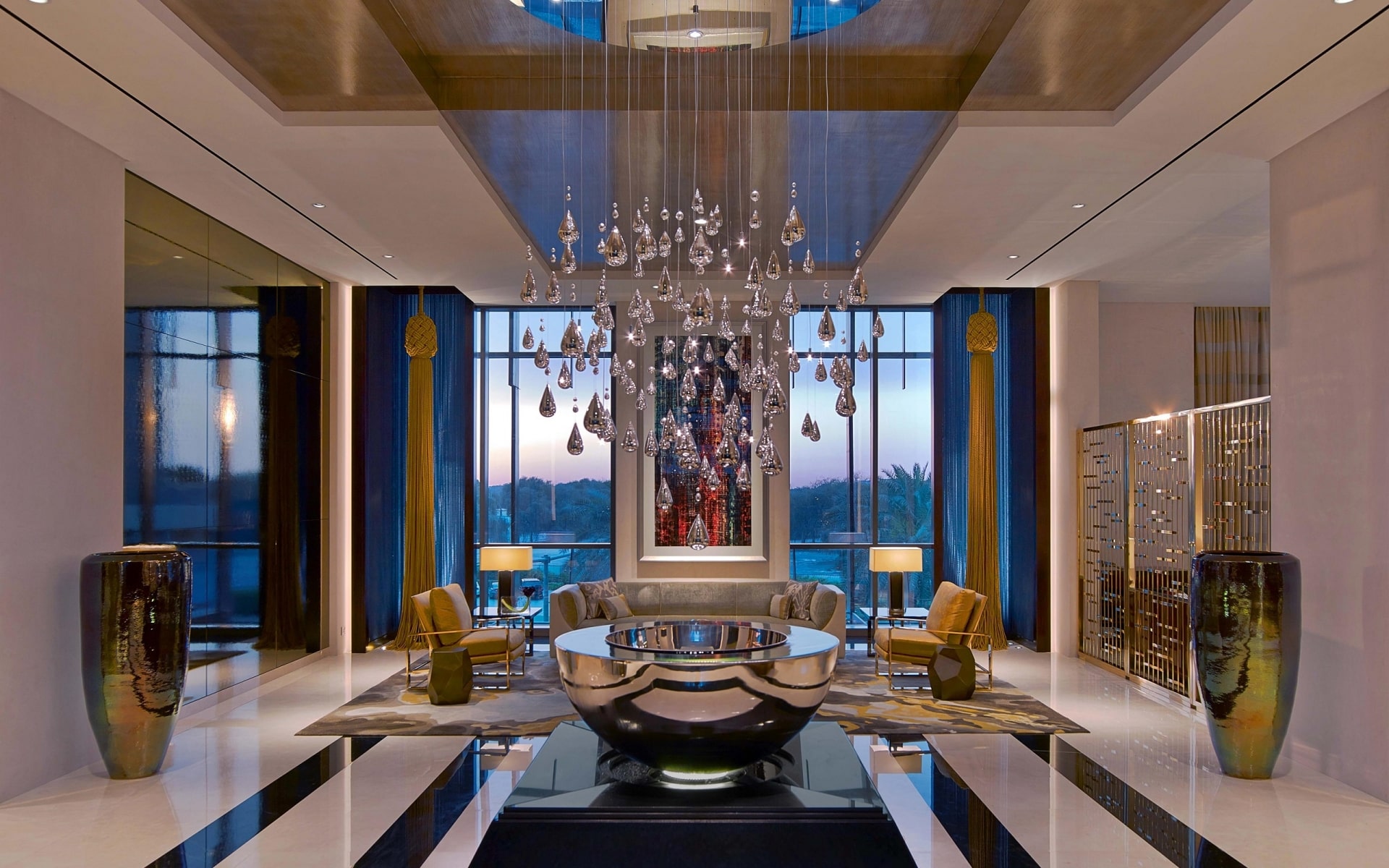
Lighting in Dubai interiors is no longer just functional—it’s sculptural. From cascading glass chandeliers to contemporary pendant clusters, designers are using lighting as the focal point of the room.
Trending Styles:
- Oversized chandeliers in dining rooms and foyers
- LED strips integrated into ceilings, walls, and stairs
- Artistic pendant lights inspired by dune shapes
- Smart lighting installations that adjust tones throughout the day
Good lighting not only elevates visual appeal but also reinforces mood and spatial drama.
6. Minimalist Luxury: The “Understated Opulence” Look
Minimalism is evolving globally, but in Dubai, it’s taking on a luxurious twist. Rather than a stark and cold aesthetic, Dubai’s version of minimalism is warm, textured, and high-end.
Features of Dubai Minimalist Luxury:
- Clean lines with subtle accents
- Muted and monochromatic palettes
- Premium materials such as marble, suede, and stone
- Hidden storage to maintain uncluttered spaces
The result is an environment that feels both serene and indulgent—perfect for modern family living.
7. Indoor–Outdoor Living
Given Dubai’s emphasis on lifestyle and recreation, homes are increasingly designed to blur the lines between indoor and outdoor spaces. Large glass doors, open-plan terraces, and private courtyards are all essential elements of 2025 living.
Why It Works in Dubai:
- Ideal for villas and townhouses with garden spaces
- Enhances natural light and ventilation
- Perfect for social gatherings and everyday relaxation
Expect to see outdoor kitchens, pergolas, resort-style landscaping, and spa-like pool lounges becoming more integral to home design.
8. Rich Natural Materials and Textures
Dubai’s timeless love for marble continues, but this year introduces a broader range of textural contrasts.
Popular Natural Materials:
- Travertine
- Onyx
- Walnut and oak wood
- Rattan and cane
- Polished concrete
Interiors are increasingly layered—pairing smooth marble with textured walls, or wood grain with metallic accents—to add visual depth.
9. Custom-Made Everything
Customization has become a cornerstone of luxury in Dubai. From bespoke walk-in wardrobes to handcrafted cabinetry and personalized lighting, homeowners want interiors that reflect their identity.
Benefits of Bespoke Design:
- Perfect fit for unusual layouts
- High craftsmanship and durability
- Allows full expression of personal style
Whether it’s a custom majlis seating area or a tailor-made feature wall, individuality is the new luxury.
10. Neutral & Desert-Inspired Color Palettes
While bold colors are still popular, many homeowners are gravitating toward palettes inspired by the UAE’s natural landscapes.
Trending Desert-Inspired Shades:
- Sand beige
- Clay and terracotta
- Muted gold
- Warm taupe
- Soft whites
These tones create a calming, grounded atmosphere and pair beautifully with Dubai’s natural light.
11. Multi-Functional and Flexible Spaces
With more people working from home and entertaining indoors, interior design in Dubai is incorporating adaptable areas.
Examples:
- Guest rooms that double as home offices
- Movable partitions for open-plan flexibility
- Foldaway furniture for smaller apartments
- Multi-use kitchen islands
The goal is to maximize functionality without compromising on elegance.
12. Art-Centric Interiors
Dubai’s vibrant art scene—fueled by events like Art Dubai and an influx of galleries—has inspired homeowners to treat art as a central interior feature.
Art Trends:
- Oversized paintings and installations
- Sculptural furniture pieces
- Mixed-media art walls
- Curated collections displayed museum-style
Art not only personalizes a space but also elevates luxury to the next level.
Final Thoughts
Dubai continues to lead the world in luxury design, and 2025’s trends reflect a beautiful balance between innovation, cultural identity, sustainability, and refined luxury. Whether you’re building a dream home or simply revamping your space, these trends offer inspiration for creating interiors that are both stylish and meaningful.